
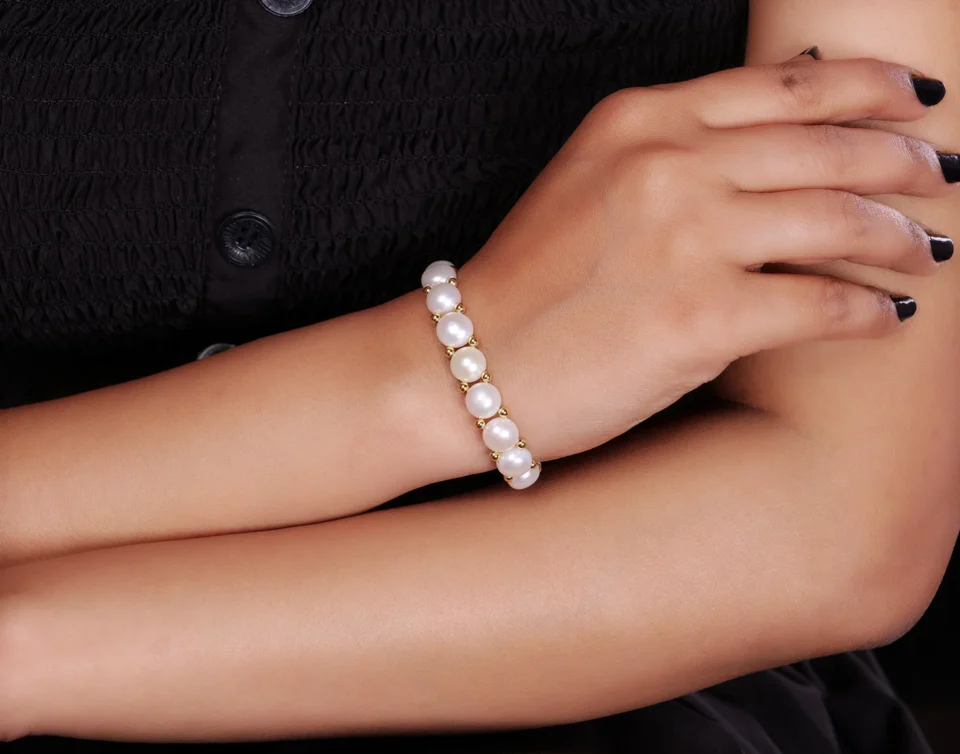
Jewelry can look convincing at first glance, especially when materials are designed to replicate the appearance of something rare or valuable. Pearls are a good example of this. Modern manufacturing techniques have made imitation pieces more visually convincing than ever, which can make it difficult for buyers to understand what they are actually purchasing.
A real pearl bracelet is formed through a natural process inside a mollusk, while imitation pearls are typically made from glass, plastic, or shell materials coated to resemble a pearl’s surface. The difference is not always obvious under shop lighting or in online photos, but there are consistent indicators that help separate natural pearls from synthetic ones.
Understanding these differences is useful whether someone is buying jewelry for personal use or as a gift. It also helps explain why pricing can vary so widely between pieces that appear similar at first glance.
Natural pearls tend to have depth rather than uniformity. When examined closely, they reflect light with subtle variations and soft highlights. Imitation pearls usually have a more consistent shine that looks flat or overly glossy. This uniformity is often the first visual clue that a piece is not made from natural pearls.
Surface texture is another important indicator. Natural pearls almost always show minor imperfections, even when they are high quality. These can include small ridges, dimples, or uneven areas. Imitation pearls are often too smooth, as they are produced using molds or coatings designed to eliminate flaws.
Weight can also reveal differences. Natural pearls generally feel heavier than plastic-based alternatives. Glass imitations may have similar weight, but they still differ in how they feel against the skin. Natural pearls tend to feel cool initially and warm gradually, while synthetic materials often adjust to temperature more quickly.
When comparing jewelry pieces, buyers often look for practical ways to identify authenticity. Common checks include:
- Rubbing two pearls together to feel for slight resistance rather than smooth sliding
- Examining drill holes for sharp edges or peeling coatings
- Checking whether surface color appears layered rather than painted
- Noting variations in shape and size rather than perfect uniformity
These methods are not foolproof on their own, but taken together they provide a clearer picture of what a piece is made from.
Another distinction lies in durability over time. Natural pearls can last for decades when cared for properly, developing a softer patina rather than deteriorating. Imitation pearls often show wear more quickly, especially around drill holes or areas that experience friction. Coatings can chip or fade, exposing the base material underneath.
Price differences reflect these factors. Natural pearls require time, environmental conditions, and careful harvesting, which contributes to higher costs. Imitation pieces are faster and cheaper to produce, making them accessible but less durable in the long term.
It is also worth noting that documentation and seller transparency matter. Reputable sellers usually provide clear descriptions of materials and sourcing. Vague language or a lack of detail often signals that a piece may not be what it appears to be.
Being able to recognize these differences allows buyers to make informed decisions based on use, longevity, and value rather than appearance alone.