
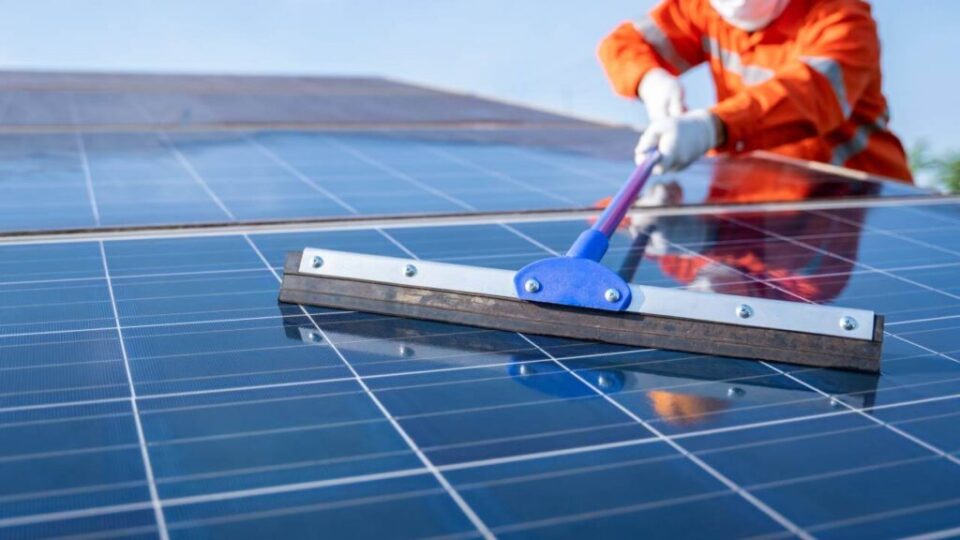
Photovoltaic systems represent a significant financial investment geared toward reducing long-term energy costs and operational carbon footprints. While solar panels are inherently durable due to the absence of moving parts, they are not completely maintenance-free. Environmental exposure, thermal cycling, and electrical degradation can steadily erode system efficiency over time.
Implementing a structured preventative maintenance protocol ensures that solar arrays operate at peak thermodynamic and electrical efficiency. Maximizing energy output requires clean optical pathways, secure physical installations, and optimized electrical inversions. This comprehensive guide outlines technical strategies, cleaning regimens, and inspection workflows designed to extend the operating life of residential and commercial solar infrastructures.
Optical Maintenance and Surface Cleaning
The primary determinant of a solar panel’s instantaneous efficiency is the amount of solar irradiance that successfully penetrates the protective glass layer to reach the silicon photovoltaic cells. Environmental debris accumulation creates a barrier that reflects or absorbs incoming light, leading to measurable power generation drops.
The Impact of Soiling and Debris
Soiling refers to the accumulation of dust, pollen, bird droppings, industrial particulates, and agricultural residue on the surface of the modules.
-
Uniform Soiling: A thin, even layer of dust across the entire array reduces system efficiency by casting a mild shade over all cells. This type of reduction is predictable but can decrease power output by 5 percent to 25 percent depending on geographic location and rainfall frequency.
-
Localized Obscuration: Bird droppings, fallen leaves, and localized sap pose a more severe threat. When a single cell or a small string of cells is completely blocked, it acts as a resistor within the electrical circuit. This forces the remaining cells in the string to pass their current through the obscured cell, causing localized overheating known as hot spots, which can permanently damage the module casing.
Cleaning Protocols and Material Safeguards
Cleaning solar modules must be performed with precision to avoid thermal shock or mechanical damage to the specialized anti-reflective glass coatings.
-
Timing Strategy: Always clean panels during the early morning hours, late evening hours, or on heavily overcast days. When sunbeams strike the modules, internal temperatures can exceed 150 degrees Fahrenheit. Introducing cold water to hot glass causes sudden thermal contraction, which can shatter the tempered glass or create microfractures within the silicon wafers.
-
Fluid Dynamics and Chemistry: Use pure, demineralized, or deionized water whenever possible. Hard water contains high concentrations of calcium and magnesium, which leave behind white mineral scales as the water evaporates. These deposits permanently bounce light away from the cells. Never use abrasive scouring pads, steel wool, or high-pressure power washers, as they scratch the anti-reflective coating. Instead, opt for soft squeegees, microfiber brushes, or specialized solar cleaning wipers.
-
Chemical Restrictions: Avoid harsh chemical detergents, bleach, or ammonia-based glass cleaners. These substances leave a thin chemical film that attracts airborne dust, accelerating future soiling. If pure water is insufficient for oil-based soot or sap, a mild, biodegradable, soap-free surfactant formulated specifically for solar glass may be applied gently.
Structural and Mechanical Inspections
Solar panels must withstand immense mechanical stress from wind uplift, heavy snow loads, and seismic vibrations over their multi-decade lifespans. Regular mechanical assessments preserve the structural integrity of the entire array.
Racking and Fastening Verification
The aluminum framing and mounting tracks secure the modules firmly to the roof rafters or ground-mounted foundations. These systems must be checked systematically.
-
Torque Testing: Fasteners, mid-clamps, and end-clamps can loosen over time due to wind-induced vibrations and the natural expansion and contraction of metals during day-night temperature swings. Routinely check that all mounting bolts meet the manufacturer’s specified torque settings.
-
Corrosion Mitigations: Galvanic corrosion occurs when two dissimilar metals, such as steel and aluminum, come into direct contact in the presence of moisture. Ensure that stainless steel fasteners are properly isolated from aluminum rails using specialized washers or anti-seize compounds to prevent premature structural failure.
Vegetation Management and Shading Audits
Surrounding landscapes evolve over time, and what was a perfectly unshaded roof during installation may face new obstructions years later.
-
Canopy Growth Control: Trim branches from nearby trees that threaten to cast shadows over the array during peak solar windows, which generally run from 10:00 AM to 4:00 PM. Even partial shade on a single module can trigger internal bypass diodes, dropping the output of an entire string of panels.
-
Under-Array Pest Exclusion: Ground-mounted arrays and pitched roof installations leave a small gap beneath the modules for ventilation. Squirrels, birds, and rodents frequently utilize this shaded space for nesting. These animals often chew through exterior insulation jackets, creating dangerous electrical shorts. Installing physical barriers like wire mesh critter guards around the perimeter of the array prevents animal intrusion.
Electrical Component Optimization
The electrical infrastructure converts the raw direct current generated by the silicon cells into usable alternating current. Maintaining these electrical connections protects the system against performance drops and structural fire hazards.
Inverter Diagnostic Metrics
The inverter serves as the computational brain and primary workforce of the solar installation. Because it actively switches high-voltage current, it experiences higher failure rates than the solid-state panels.
-
Error Code Monitoring: Check the inverter’s liquid crystal display or mobile monitoring application weekly for systemic fault codes or warnings. Common errors include ground faults, isolation faults, or grid frequency anomalies.
-
Thermal Management: Inverters generate substantial heat during peak inversion cycles. Ensure that cooling fins and air intake vents remain clear of dust, cobwebs, and debris. If an inverter overheats, its internal programming activates a thermal derating protocol, intentionally capping total power output to protect internal circuitry.
Wiring and Conduit Integrity
Exposed wiring runs beneath the modules must be kept off the roof surface and protected from direct environmental degradation.
-
Wire Management Inspection: Ensure that UV-stabilized zip ties or stainless steel module clips keep all wires elevated. Wires resting directly on shingles or metal roofing are subjected to abrasive friction during high winds and can sit in pools of stagnant water during heavy rains.
-
Conduit Joint Sealing: Check exterior electrical conduits for cracks or separation at junction boxes. If moisture penetrates a conduit run, it can corrode terminal blocks, increase electrical resistance, and create a high-resistance arc fault hazard.
Data Analytics and Performance Tracking
The most effective method for detecting hidden system failures is the continuous tracking of energy production data. Modern monitoring software provides granular insight into system health.
Baseline Comparative Analysis
-
Degradation Modeling: Standard monocrystalline solar panels degrade naturally at a rate of roughly 0.5 percent per year. Homeowners should compare current monthly production data against historical baselines from the previous year while factoring in seasonal weather variances. A sudden drop of 10 percent or more that cannot be attributed to weather patterns indicates a localized failure, such as a blown string fuse or a failed bypass diode.
-
Inverter-Level Telemetry: Utilize microinverter or optimizer systems to monitor performance at the individual module level. If a single panel underperforms due to localized internal defects or microcracking, the monitoring portal will flag that specific unit, allowing targeted maintenance without requiring a full-system teardown.
Frequently Asked Questions
How does snow accumulation affect solar panels, and should it be manually removed?
Snow blocks all incoming sunlight, temporarily halting energy production. In most instances, manual removal is unnecessary because solar panels are installed at an angle and retain residual heat, causing snow to slide off naturally. If heavy snow persists, use a specialized, soft-bristled solar snow rake with an extension pole to pull the snow down. Never use metal shovels, stiff push brooms, or windshield scrapers, as they will permanently gouge the tempered glass.
What is PID in solar modules, and how can it be detected or prevented?
Potential Induced Degradation is an undesirable phenomenon where a voltage leakage occurs between the semiconductor material of the solar cell and the grounded module frame. This leakage disrupts the internal electrical flow, causing severe performance drops. PID can be detected via thermal imaging cameras, which reveal distinct hot patterns on affected cells, and it is prevented by utilizing high-quality, PID-resistant modules alongside modern inverters that balance system voltage polarity.
How often should a homeowner schedule a professional solar electrical audit?
While surface cleanings can be managed by the property owner, a comprehensive professional electrical audit should be performed every three to five years. Certified solar technicians possess specialized diagnostic tools, such as insulation resistance testers and thermal imaging cameras, allowing them to locate internal microcracks, test grounding continuity, and verify the physical integrity of concealed connections that are inaccessible to untrained individuals.
What does a ground fault error code on an inverter signify?
A ground fault indicates that an active current-carrying conductor has made accidental physical contact with the grounded framing, racking, or roof surface. This bypasses the intended circuit path and poses a shock and fire hazard. When this occurs, the inverter automatically shuts down as a safety precaution. This issue is typically caused by chewed wires, water ingress into junction boxes, or sharp metal edges cutting through wire insulation.
Can a damaged bypass diode be repaired, or does the entire panel require replacement?
Bypass diodes are safety components built into a module’s junction box to route electrical current around shaded or damaged cells. If a diode fails due to a lightning surge or extreme overheating, it often locks into a permanent closed or open position, knocking out power to an entire third of that panel. In modern sealed junction boxes, individual diodes cannot be cleanly replaced, which usually requires replacing the entire solar module under warranty.
Why is string inverter efficiency more vulnerable to partial shading than microinverter systems?
In a traditional string inverter setup, multiple panels are wired together in a series circuit, meaning the total current of the entire string is limited by the output of the lowest-performing panel. If one panel is shaded, the throughput of the entire line drops. Microinverters operate in a parallel configuration by converting direct current to alternating current right at the individual panel level, isolating shading losses strictly to the affected module.
How do high ambient outdoor temperatures impact total solar panel power output?
Solar panels require sunlight, not ambient heat, to generate electricity. As silicon cells get hotter, their internal semiconductor electrons become overly excited, which increases electrical resistance and reduces the total operating voltage. This performance drop is calculated using a manufacturer’s temperature coefficient, which typically dictates that for every degree Celsius the panel rises above 25 degrees Celsius, its efficiency decreases by roughly 0.3 percent to 0.4 percent.